| Donate |
In 2025 we achieved an historic victory for California's forests.
A year ago this letter described a fast-developing threat: an industry push to set up wood-pellet biomass operations here for the first time on an industrial scale. Fighting to stop this scheme was Forests Forever's top-priority campaign for the year.
And side by side with our coalition partners we were victorious.
Promoted by the U.K.'s Drax Group and its local backer Golden State Natural Resources (GSNR), the Forest Resiliency Demonstration Project would have destroyed whole trees across a 63,000-square-mile area of California to produce over a million tons a year of pellets.
Forests Forever generated letters and emails in opposition, spoke at public hearings, garnered public comments on a project Environmental Impact Report, and took part in a successful effort to bottle up related legislation in Sacramento, Assembly Bill 706.
In June the board of GSNR announced that it was shelving its pellet project because of "current biomass market conditions." At the root of the "market conditions" can be found activist groups and thousands of concerned citizens who together alerted journalists and spurred legislators who began to pinch off subsidies to a highly polluting industry.
If you were one of the folks who submitted comments or provided other support for our organizing to stop Drax, thank you!
In 2025 we also fought against a trio of titanic federal threats to California's forests—each one of them spelling potential catastrophe for millions of acres of wild forestland.
Forests Forever supporters like you helped with actions ranging from emails to calls and letters to clicks on our social media posts to funding.
Please donate today to keep our work going into 2026 and beyond.
We Denied Drax Entry to California
The Drax scheme, which came to light in 2022, would have built two enormous wood-pellet factories in the state—one in Lassen County, the other in Tuolumne County—which together would grind up forests within a 100-mile radius around each plant and transport the finished pellets to the Port of Stockton.
From there they would be shipped overseas to be burned in power plants to produce electricity. It was a scheme to mine forest ecosystems as an industrial-scale fuel source.
This new heavy industry would have inflicted enormous damage on forest soils, water quality, wildlife habitat and recreation values, would have worsened wildfire conditions, produced noise and emissions from pellet manufacturing and transportation, and posed hazards of fire and explosion at the storage site in Stockton.
All to generate power that gives off more CO2 per kilowatt than coal.
The reasons GSNR cited for its June bailout decision were "current biomass market conditions"—mainly, European Union countries and South Korea starting to knock down their massive subsidies, needed to keep this boondoggle afloat... and broad-based public opposition.
An Environmental Impact Report for the Drax proposal had wrapped up its public comment period in January. If you were one of the Forests Forever supporters who commented in opposition to this project, thanks! Grassroots outcry without question made a huge difference.
Meantime in the California legislature, Assembly Bill 706 would have shoveled up to 15 million tons per year of forest biomass into small utility incinerators across the state.  The measure would have accomplished this by propping up two teetering fuelstock-procurement programs, BioMAT and BioRAM, that relied on financial subsidies from ratepayers and taxpayers.
Thanks in part to our grassroots pressure and that of our coalition allies this measure stalled.
Drax has long been an environmental bad actor in the wood pellet-burning power industry in the U.S. and abroad. The company has drawn millions in fines and penalties and misrepresented as "sustainable" its sourcing of fuelstock from protected old-growth forests.
We expect that GSNR now will pivot to proposing to produce wood chips industrially for an as-yet-unspecified domestic market. As forest bio-energy has proven unsound without public subsidies GSNR is expected to redouble its efforts to garner any government-provided woody material and financial support that it can.
Accordingly, a revised EIR is expected from GSNR in early 2026.
Thus we have stopped the industrial-scale forest biomass power industry in California. For now.
| Donate |
An Effective Forest-Protection Plan Assailed
At the federal level the scale of danger to U.S. forests probably reached its highest level in modern history in 2025.
In pushing back against efforts to repeal the Northwest Forest Plan, the Roadless Rule, and the Public Lands Rule we garnered public comments in formal processes for each. This added to an eventual volume of comments overwhelmingly in support of retaining these forest-protective policies.
The Northwest Forest Plan, widely regarded as an all-too-rare success in supporting old-growth recovery and protecting streams and habitat for listed species, came under the gun with proposed weakening amendments put forward by the Trump administration.
The plan since 1994 had cast a protective shield across some 24 million acres of the world's most lush, biodiverse and carbon-rich temperate rainforests.
In parts or all of six California national forests, as well as others in Oregon and Washington, watersheds that were heavily damaged by over a century of logging have since come a long way toward recovery.
The plan not only has benefited popular and highly threatened species such as the northern spotted owl, but also allowed significant, though reduced, timber extraction to continue.
But now at the onset of a new presidential administration hostile to conservation the U.S. Forest Service is pressing for sweeping revisions to the Plan.
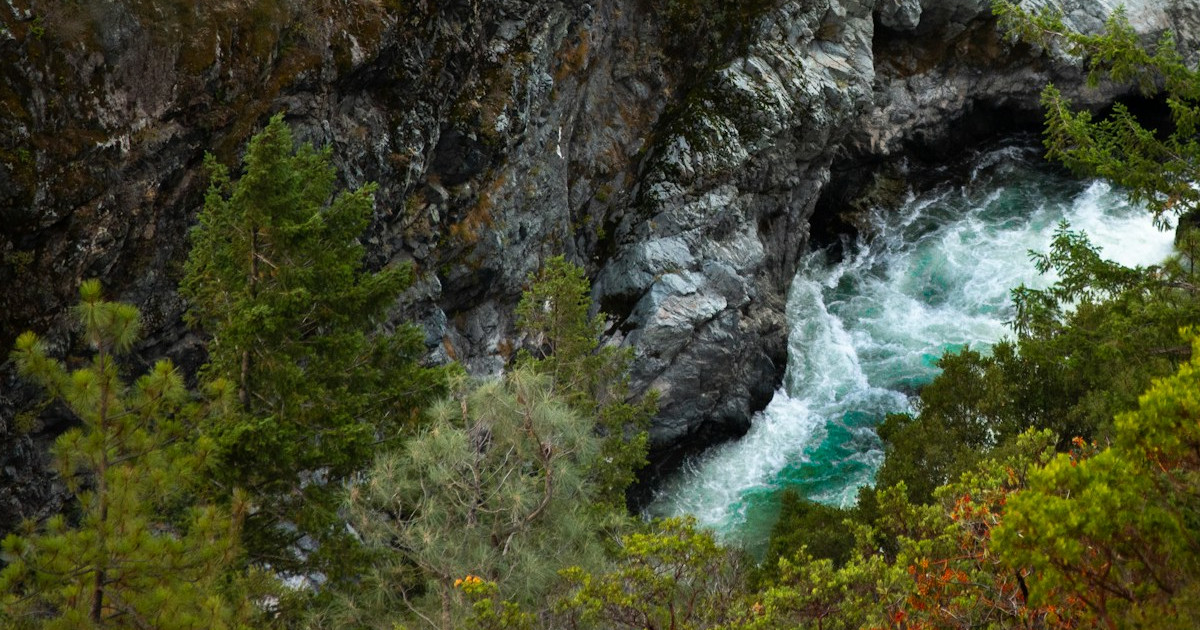
The agency's proposals would newly expose over 800,000 acres of mature forest to commercial logging, at the same time creating loopholes in existing protections for wildlife and water.
Using outdated and discredited scientific arguments, the agency seeks to justify more logging in the name of wildfire prevention. However a more effective approach to wildfire would direct public resources to home-hardening and to better managing the interface between wildlands and communities.
Further, the Forest Service appears to be using tribal engagement in the agency's forest management as a wedge issue to divide conservationists from their tribal allies. Regrettably absent from the initial plan, tribal engagement is very much needed. But it should be approached separate from, not linked inextricably to, the damaging resource-extraction schemes the Forest Service wants in the revised plan.
Forests Forever cast the net for public comments that rejected weakening the Plan, helping to lay a solid base of opposition. The effort to gut the plan will likely take its next step in 2026.
| Donate |
Bedrock Roadless Rule Forest Protections Slated for Demolition
Forests Forever played a key role in the Roadless Area Conservation Rule from its beginning, generating thousands of letters and postcards in support of it in 2001.
When the rule was first enacted then it generated over 1.6 million public comments in its favor—more than any other regulation in U.S. history. We organized grassroots opposition to its later repeal by Pres. George W. Bush in 2005 and were a co-plaintiff in a successful 2006 lawsuit that overturned the Bush repeal.
But in June 2025 Agriculture Secretary Brooke Rollins unveiled her department's intent to rescind the highly popular rule, which safeguards 58.4 million acres of wilderness-quality national forest lands from an array of extractive uses.
California's share of the Roadless Rule-shielded forests comes to 4.4 million acres—an area almost six times larger than Yosemite National Park.
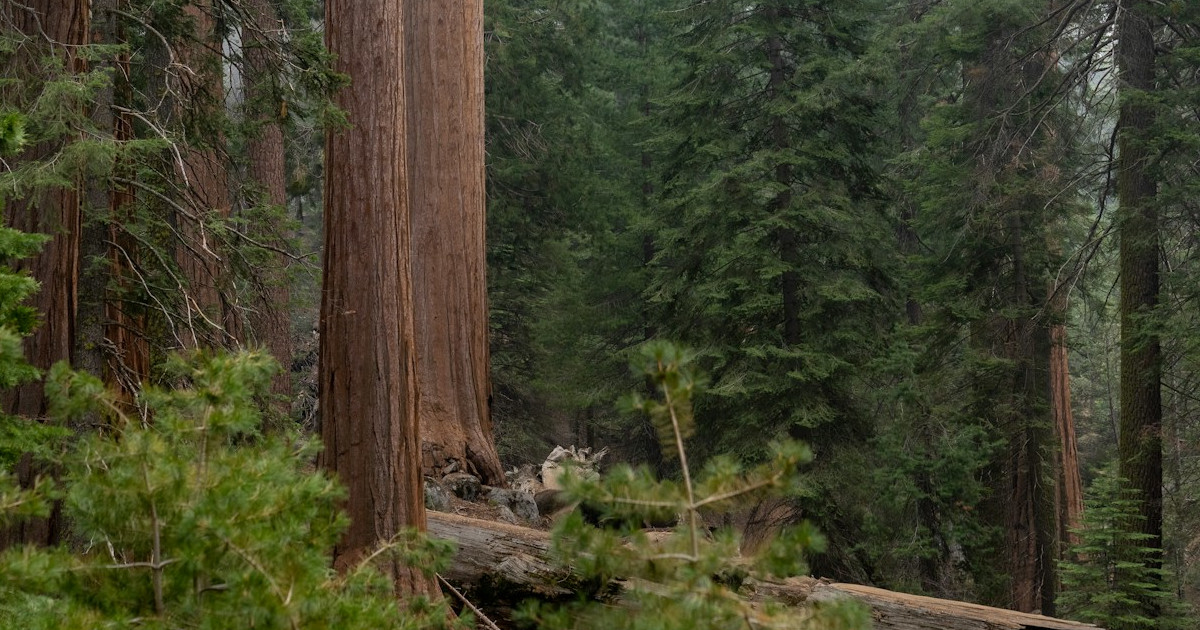
To erase the rule would constitute a giant step backward in society's efforts to reverse the twin climate and species-extinction crises.
Keeping existing forests standing—called proforestation—is the most cost-effective and readily available means of drawing down excess atmospheric carbon and storing it away in vegetation and soils.
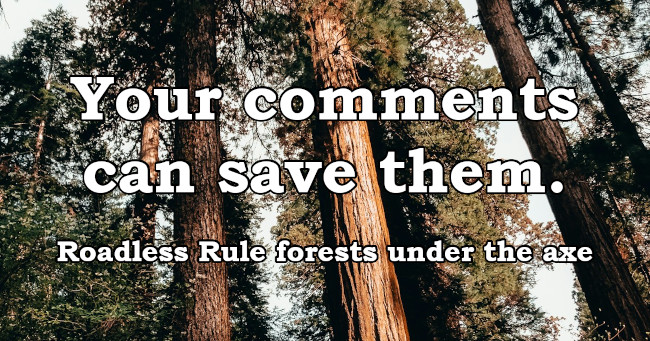
We also are supporting an excellent proactive measure—the Roadless Area Conservation Act of 2025 (HR. 3930 in the U.S. House and S. 2042 in the Senate). This bill would codify the Roadless Rule, affording it, in the event of another future hostile administration, a greater level of resilience by making the rule a statute.
The Roadless Rule protects 30 percent of the entire national forest system's acreage. It makes no sense to build roads in these stands. Roadbuilding greatly increases wildfire risks by providing an entryway for human ignition sources, as well as by promoting drying wind and the introduction of flammable weeds and grasses.
What's more, the Forest Service reports that it is carrying an $8.4 billion backlog in deferred maintenance of the extensive road network it already has under its jurisdiction.
| Donate |
Our Biggest Land Management Agency's Woodlands, Forests Threatened
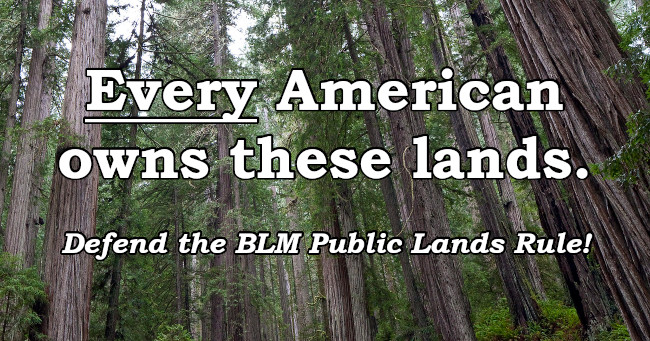
The only land management agency with jurisdiction over more public land than the Forest Service, the Bureau of Land Management (BLM), in 2025 saw an assault on its newly enacted Public Lands Rule. BLM's jurisdiction covers some 245 million acres coast to coast. This includes 15 million acres in California, much of it forest and woodland.
The groundbreaking rule first rolled out in 2024 under heavy fire from industry and right-wing ideologues. Now it is threatened with recission by the Trump Administration.
The Public Lands Rule reaffirms the never-realized mandate of the Federal Land Policy Management Act of 1976, which called for truly balanced uses of public lands within the agency's jurisdiction. It is a common-sense notion: The rule now places conservation on an equal footing with the damaging uses that have dominated BLM management for decades: logging, grazing, oil and gas development, and mining.
When the rule was promulgated in 2024 it received overwhelming public support, with 92 percent of all comments favorable, thanks in part to Forests Forever's outreach efforts.
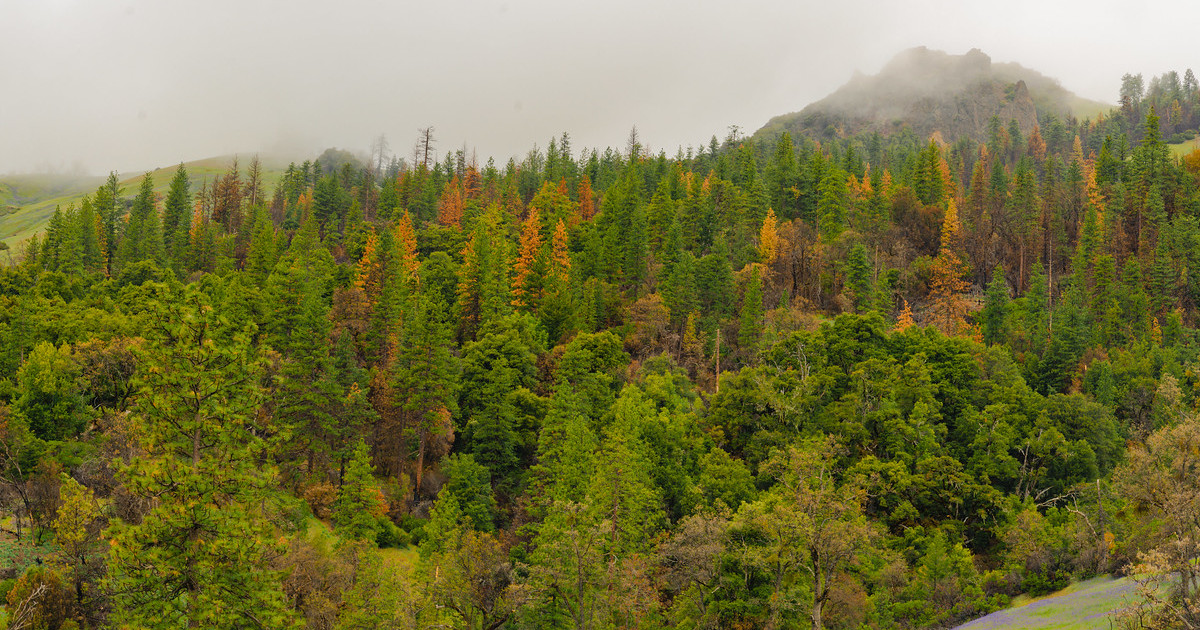
Recently released data show that some 81 percent of BLM lands currently are open to oil and gas leasing. Enough is enough.
Sustainable use of public lands represents a powerful economic engine. Case in point—the recreation industry's more than $1.2 trillion in annual economic output far outpaces oil, gas, and mining.
Local and state economies benefit long-term from recreation and tourism, which rely on lush, beautiful, unimpaired woodlands and watersheds.
Like the other federal threats we expect this one to advance yet further in 2026.
| Donate |
And If That Wasn't Enough—the Orwellian "Fix Our Forests Act"
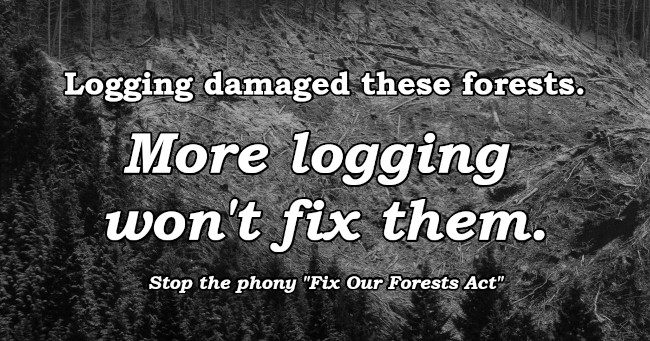
The timber industry learned long ago that the American public leans in favor of conservation and resource protection. So the best way to sell logging, the industry figures, is to make it sound green.
Enter the "Fix Our Forests Act (FOFA)."
This measure exploits the public's justifiable fear of wildfire danger by palming off the idea that more logging is the best solution.
FOFA would fast-track deforestation and weaken or cast aside laws currently ensuring that bona fide science enters the decision-making process. It also would hamstring provisions for citizen review and legal challenge of logging projects.
Missing from the bill: actual solutions to property destruction and loss of human life from wildfire—namely, home hardening, defensible space work, and community preparedness planning.
FOFA calls for logging in the name of fuels reduction, including taking the older, larger (not surprisingly, the more commercially valuable) trees, which tend to resist fire.
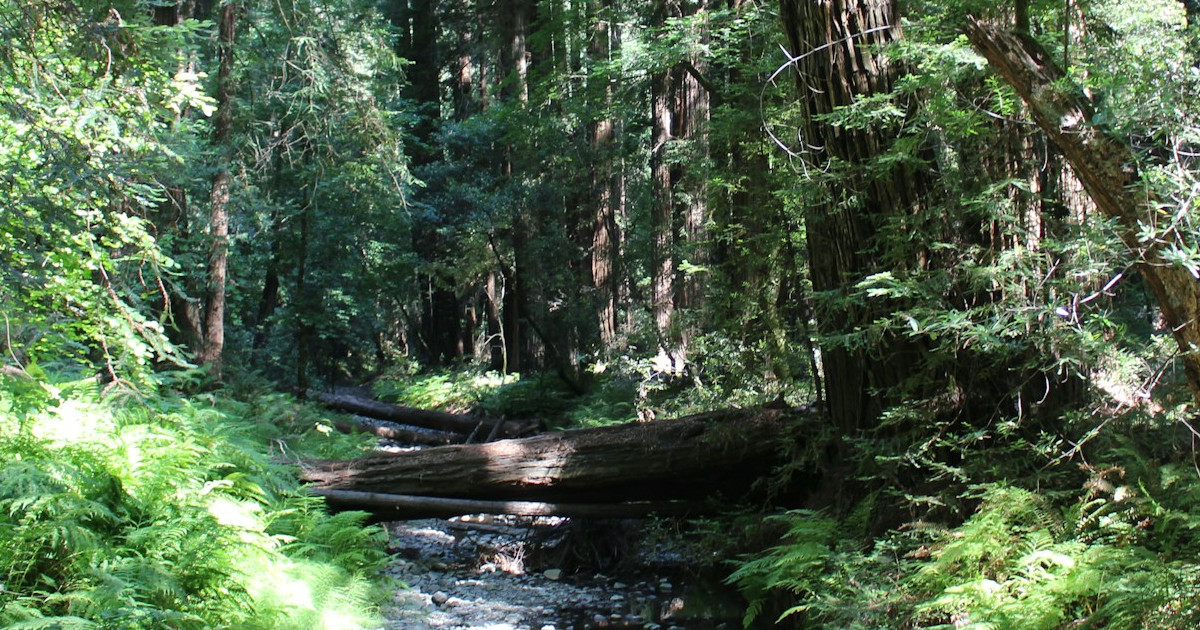
But the latest, best independent science shows that removal of vegetation, especially bigger trees, dries out the forest by removing moisture-retaining vegetation and by opening up shading canopy, as well as increasing wind speeds.
All 154 national forests and forested BLM and tribal lands—more than 200 million acres, or twice the area of California—are in the crosshairs.
The National Environmental Policy Act and Endangered Species Act would be among the bedrock protective statutes weakened or discarded.
Proposed Categorical Exclusions—exemptions from normal review and accountability—would throw open areas of up to 10,000 acres. At the same time "fireshed management areas" of 25 times that size could be altered and degraded.
In 2025 we launched a broad-based outreach effort to combat FOFA.
Forests Forever was birthed in the 1990s fight to save the then-largest unprotected virgin redwood forest remaining in the world, Headwaters Forest.
With our large field and phone canvass programs we generated tens of thousands of letters, calls, and emails. Today an important chunk of Headwaters is the 7500-acre BLM Forest Reserve.
Forests Forever brings a long history in these California forest conservation battles and many more. Our experience and substantial grassroots organizing capacity render Forests Forever invaluable among the advocacy groups fighting for forest conservation today.
Your continued financial support is, as ever, essential to keep our efforts moving forward.
In 2026 Forests Forever must stay strong to (again) defeat the would-be forest biomass industry, as well as turn back Trump's multi-front onslaught against the nation's forests. These battles and, if experience is any guide, new ones lie ahead.
Having you at our side will greatly help to ensure our success.
| Donate |

Paul Hughes
Executive Director
Forests Forever
 Forests Forever's new Swag Store offers a sizable array of fun items with which you can amplify our message, start a conversation— or just stay warm or hydrated. All carry our distinctive old-growth-forest-and-crescent-moon logo and many have our "Restore, Reinhabit, Re-enchant" motto. Except for our stock of books and bumper stickers all items are strictly printed to order, which means we don't produce and store unsold stock, with its attendant cost and potential waste. So browse our store and wear our logo with pride! All net proceeds benefit Forests Forever and its work to protect and restore California's forests. |
 |